Write DAX calculated columns, calculated tables and measures with confidence, from RELATED and SWITCH to SUMX and CALCULATE
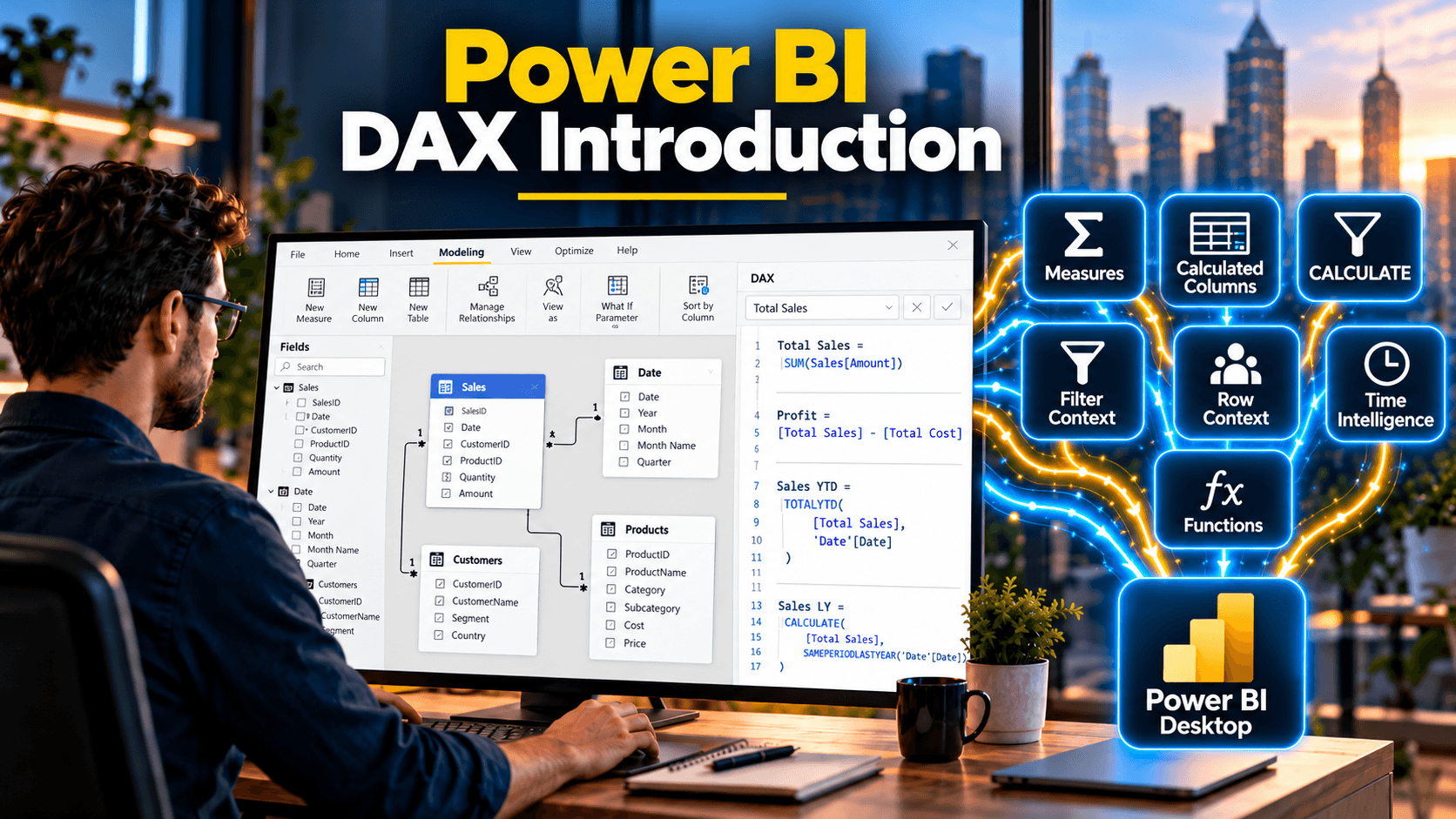
Learn the DAX formula language from the ground up and start building the calculations that make Power BI reports truly useful. This course takes you step by step through the three types of DAX calculation (calculated columns, calculated tables and measures) and shows you when to use each one.
You start with DAX syntax and the formula bar, then create calculated columns that bring values across relationships with RELATED and RELATEDTABLE and apply logic with nested IFs, AND, OR, IN and SWITCH. You build calculated tables, including a complete date table in a single ADDCOLUMNS formula, create explicit measures, and use iterator functions such as SUMX and AVERAGEX. Finally, you take your first steps with CALCULATE to change the filter context, and learn how to diagnose and fix the errors that trip up most DAX beginners.
This is a hands-on course: the course files and the courseware are included, so you can follow along with every video.
Topics Covered:

CEO of AI Awareness Limited | 25+ years in IT training | Helping non-technical professionals go from AI-curious to AI-confident
Grant Gamble has spent over 25 years in IT and technology training, working with businesses across the UK on practical AI adoption. He is CEO of AI Awareness Limited and founder of G Com Solutions Limited, and specialises in helping non-technical professionals move from AI-curious to AI-confident through hands-on, domain-specific training and certification. Grant's view is that AI is not a single tool but a set of capabilities spread across every department, often underused or ungoverned. The organisations making real progress are not the ones running generic awareness programmes; they are the ones mapping specific AI capabilities to specific workflows and giving their people the time and permission to use them. His courses take exactly that approach. His teaching covers practical AI literacy for non-technical professionals, AI skills and workforce readiness, and the governance and responsible use of AI at work. Expect a hands-on style: real business examples, clear explanations of why each technique works, and skills you can apply to your own work straight away.
