
search
Master global and local explainability for decision trees, random forests, and gradient boosting machines.
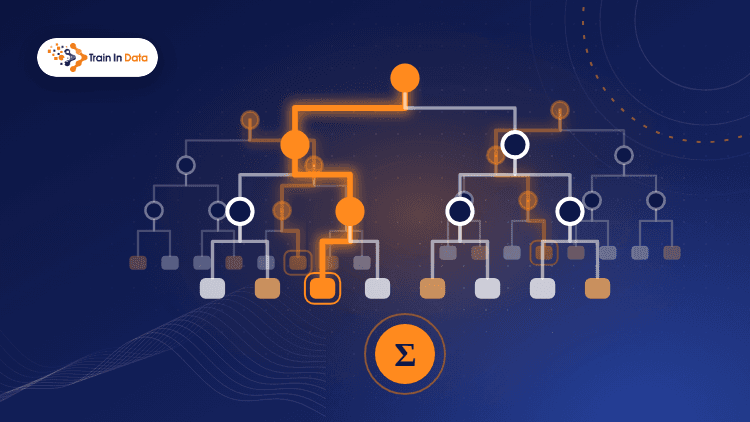
This course provides a comprehensive framework for interpreting tree-based machine learning models, moving from simple decision trees to complex ensemble methods. It covers the mechanics of tree induction, feature importance, and impurity-based metrics for both global and local model explanations. Participants will learn how to extract and visualize insights from random forests and gradient boosting machines, including practical implementations using scikit-learn, XGBoost, and LightGBM. The content emphasizes the mathematical intuition behind model predictions and provides strategies for assessing feature contributions in both regression and classification tasks.
Topics Covered:
Data Scientist | Python Developer | Author and Instructor
I'm a data scientist, machine learning educator and open-source developer. I've built machine learning models for credit risk, insurance claims and fraud prevention, and I am passionate about helping data scientists build models that hold up in real-world projects. My courses are designed for intermediate and advanced practitioners. They cover feature engineering, feature selection, hyperparameter optimization, imbalanced data and the design of robust machine learning pipelines, with a strong emphasis on techniques you can apply straight away in your own work. In the age of generative AI, when a working model can be coded in minutes, the real skill lies in understanding the methods deeply enough to review that output with rigor and a critical eye, and that's exactly what these courses are built to develop. I'm the creator and maintainer of Feature-engine, an open-source Python library for feature engineering and feature selection used by data scientists worldwide. I'm also the author of three books published by Packt: Python Feature Engineering Cookbook, Feature Selection in Machine Learning, and Imbalanced Data: Myths, Mistakes and Modern Solutions. I speak regularly at conferences and meetups, and I enjoy connecting technical communities with the tools and knowledge they need to succeed. In 2018 I received a Data Science Leaders Award, and in 2019 LinkedIn recognized me as one of its voices in data science and analytics. Before moving into data science, I earned an MSc in Biology and a PhD in Biochemistry, then spent more than eight years as a research scientist at institutions including University College London and the Max Planck Institute. That scientific training still shapes how I teach: rigorous, evidence-based, and focused on understanding why a method works before reaching for it.